
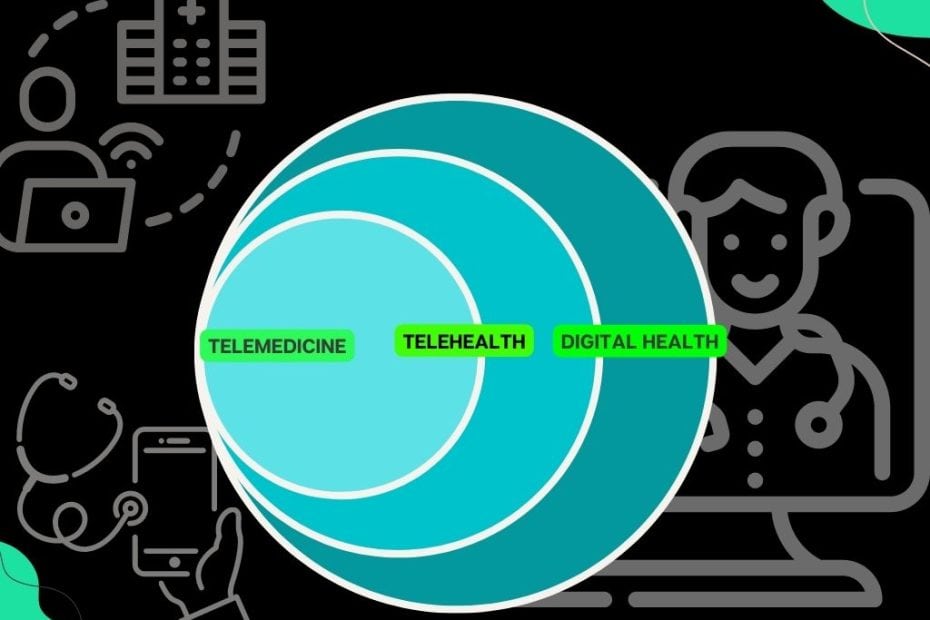
Digital Health vs Telehealth vs Telemedicine
Telemedicine, Telehealth, and Digital Health are often used interchangeably to refer to the use of technology to provide healthcare services remotely. However, these terms have specific meanings and refer to different aspects of the use of technology in healthcare. Here’s a closer look at the differences between telemedicine, telehealth, and digital health.

Telemedicine
Telemedicine refers specifically to the delivery of medical services and consultation using telecommunication and information technologies. This can include video conferencing, phone calls, and other forms of remote communication to allow healthcare providers to interact with patients remotely. Telemedicine is often used to provide specialized medical care to patients in remote areas or to provide consultations to patients who are unable to physically visit a healthcare provider due to their location or mobility issues.
- The Rise of Telemedicine in Ethiopia and LMICs: Is it Living Up to Its Initial Promise?NewThe Rise of Telemedicine in Ethiopia and LMICs: Is it Living Up to Its Initial Promise?

Telehealth
Telehealth, on the other hand, is a broader term that refers to the use of technology to deliver a range of healthcare services remotely. This can include telemedicine, but also includes other services such as remote monitoring, electronic health records, and other forms of healthcare-related information exchange. Telehealth is often used to provide patients with more convenient access to healthcare services and to improve the efficiency of the healthcare system.
Digital Health
Digital health refers to the use of technology to transform the delivery of healthcare services. This can include telemedicine, telehealth, and other forms of remote care, but also includes the use of digital tools to improve healthcare outcomes. For example, digital health may include the use of mobile apps to help patients manage their chronic conditions, the use of wearable devices to track vital signs, or the use of artificial intelligence to analyze medical data and provide recommendations to healthcare providers.
In addition to improving access to care, these technologies can also improve the efficiency and effectiveness of the healthcare system. Telemedicine and telehealth can allow healthcare providers to see more patients in a given day, reducing the burden on the healthcare system. Digital health tools can help patients better manage their own health, leading to fewer hospitalizations and emergency department visits.
Overall, telemedicine refers specifically to the use of technology to provide medical consultations and care remotely, telehealth refers to the use of technology to deliver a range of healthcare services remotely, and digital health refers to the use of technology to transform the delivery of healthcare services. All of these terms are related, but they refer to different aspects of the use of technology in healthcare.