
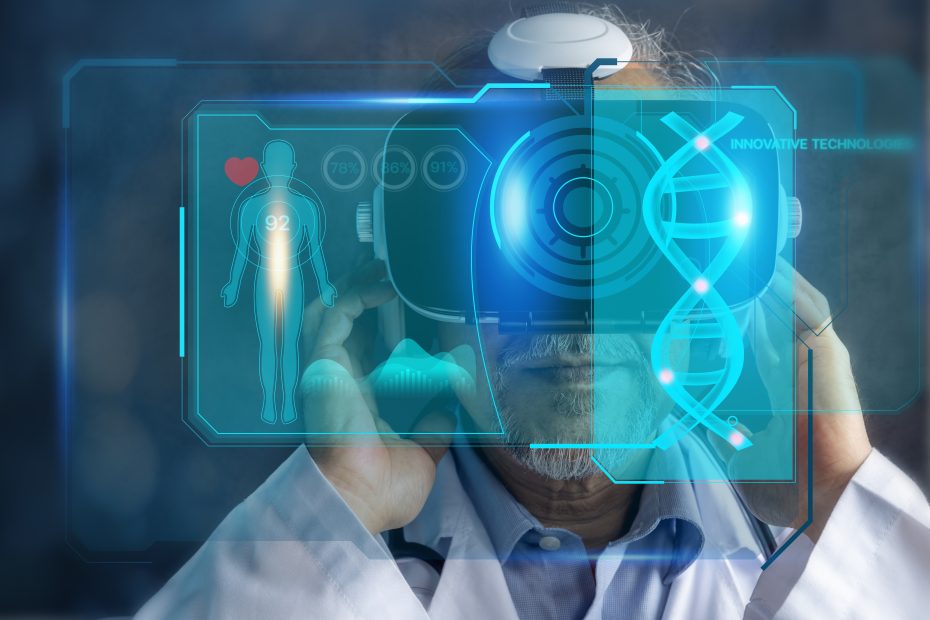
Technology has advanced to a point where it is literally changing reality. From fantasy worlds to digitally enhanced surroundings, extended reality (XR) is making it possible to be immersed in altered reality, dramatically changing the way we do things including providing healthcare.
What Is XR?
XR is an umbrella term encompassing different types of immersive technology including Virtual Reality (VR), Augmented Reality (AR) and Mixed Reality (MR). Virtual Reality (VR) completely immerses an individual in a closed virtual environment using a head mounted display (HMD) and other wearables for advanced sensory perception, replacing the user’s reality with a new virtual one. Augmented Reality (AR) creates an enhanced version of reality by using smartphones or smart glasses to overlay digital information such as texts, images or 3D contents into the user’s direct vision of the real world. An example of AR technology is Google Glass, an optical HMD that can capture and display audio and video images in real-time while interacting with the surrounding environment. Mixed Reality (MR) mixes features of VR and AR, producing new environments where physical and digital objects co-exist and interact in real time. Examples of all three are appearing in medical practice, improving quality of care.
6 Applications of XR in Healthcare
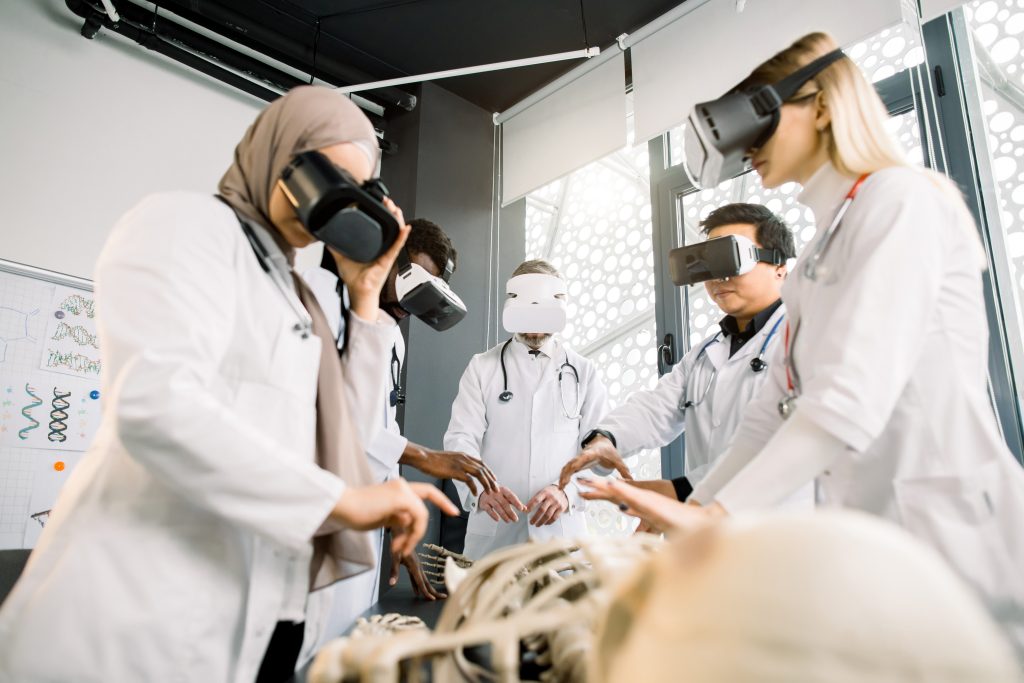
The use of XR presents a number of opportunities for transforming medical education, replacing traditional learning approaches with more immersive and engaging tools. This is best demonstrated in the use of XR for anatomy lessons, which has traditionally been taught through written materials and human cadaveric dissection. While cadaver dissection remains the mainstay of teaching anatomy, XR technology provides a more ethical and more immersive learning experience. It allows students to explore anatomical structures by creating three-dimensional views of the human body in the students’ immediate environment.
XR also effectively illustrates how anatomy relates to function. XR platforms can include features where learners can add or remove anatomical structures, specific muscles can be flexed to observe the resulting movement and pathologies and anatomical variations can be added for deeper understanding.
In addition to anatomy, XR technology allows the simulation of real-life clinical scenarios, enabling students to practice in a safe but immersive environment. For instance, the University of Cambridge in the United Kingdom uses a simulation program where healthcare workers and students use holographic patients to practice high-level decision-making and treatment choice. XR simulations are also ideal ways to provide training in emergencies and high-risk scenarios. By enhancing the preparedness and competence of future healthcare providers, XR is paving the way for higher quality of care.
Traditionally, surgeons rely on cadaver dissection and hands-on practice in the operating room (OR) to acquire surgical skills. XR eliminates concerns of patient safety and limited practice time associated with traditional methods and offers a safe and realistic opportunity for professionals to train through surgical simulation.
Not only does surgery simulation increase surgeons’ exposure to procedures, but it has also been found to be superior to traditional teaching modalities. Research by Imperial College London showed that 83% of VR-trained users could complete spinal surgery with minimal guidance, whereas 0% of those traditionally trained could accomplish the same task. Another study from UCLA’s David Geffen School of Medicine discovered a 230% boost in overall performance in tibial intramedullary nailing, a procedure to repair a fractured tibia or shin bone, among VR-trained surgeons compared to their traditionally trained peers. These findings testify to the power of XR to improve outcomes for surgical patients by providing a risk-free, immersive training environment for surgeons.
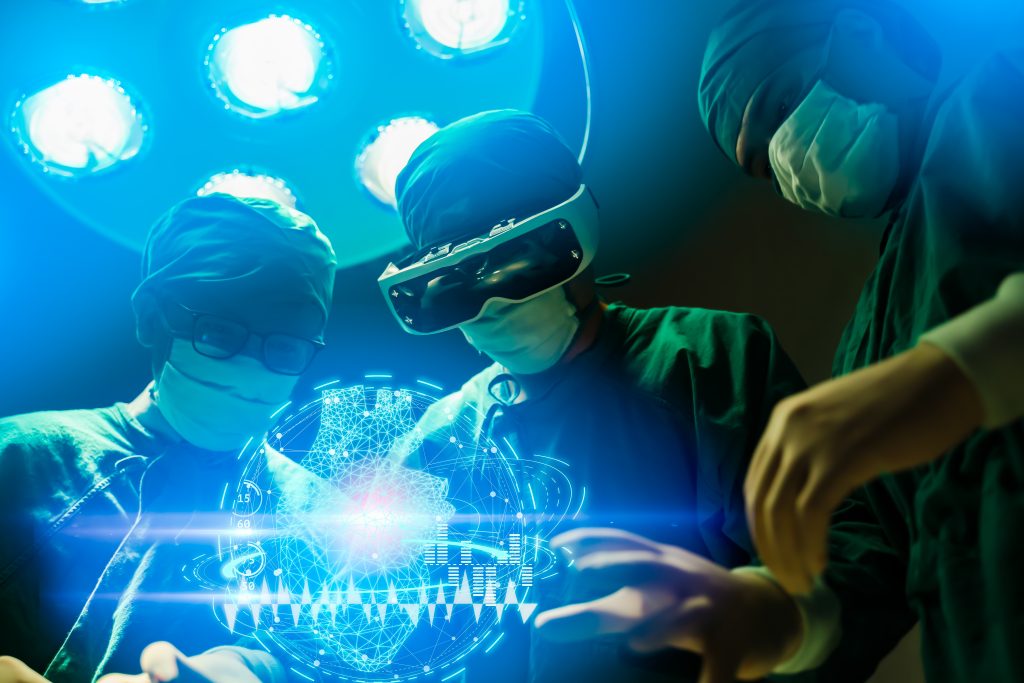
The use of XR to enhance surgery improves the safety and effectiveness of procedures. XR helps surgeons visualize organs, tumors, X-rays, and ultrasounds in real time and from multiple angles. Using 3D reconstructions of CT and MRI scans, XR enables surgeons to perform pre-operative planning more effectively. It gives them a better understanding of the surgical area and helps them develop a detailed surgical plan to perform the operation.
XR’s ability to provide real-time, comprehensive visualizations during surgery leads to higher precision and safer procedures for patients. MR can be used to overlay reconstructed models of a patient’s anatomy and the planned trajectories over the surgical field, augmenting the surgeons’ vision and increasing efficiency and precision. This type of surgery on live patients was first performed at Johns Hopkins Hospital, initially to place screws in a patient’s spine for spinal fusion and in another procedure to remove a cancerous tumor (chondroma) from a patient’s spine, with healthcare professionals in both cases attesting to the technology’s contribution to the improvement of the quality of care.
VR is incorporating aspects of neuroscience and leveraging motor learning to aid in the rehabilitation of stroke patients. After a stroke, although new neurons cannot be acquired, undamaged connections in the brain undergo adjustments to form new functional connections in a process known as reorganization. Motor and functional recovery relies on reorganization, which is improved through enriched environments and repetition of tasks.
VR systems based on neuroscience and motor learning principles allow for repetitive, frequent, task-oriented training with intensive yet modifiable difficulty. They provide patients with real-life scenarios and activities relevant to daily living, enabling them to acquire practical skills in an engaging way. The VR system also provides feedback on performance that is provided simultaneously with performance, immediately following a performance based on results or after several trials as summary feedback. Non-immersive, semi-immersive and immersive forms of VR can all be used for physiotherapy. XR-aided training of this kind makes care of higher quality than previously possible available to stroke survivors, accelerating their recovery and increasing their quality of life.
- 5 Times Shark Tank Seen The Best of Medical Entrepreneurship (Doctorprenuership)New5 Times Shark Tank Seen The Best of Medical Entrepreneurship (Doctorprenuership)
There is mounting evidence that VR can be an effective form of pain management. Approaches to employing VR for pain reduction have used a combination of meditation, guided imagery, or cognitive behavioral therapy. VR is also a powerful way to distract the brain from receiving pain signals, making it a potential solution for sudden, severe pain. For example, some people with severe burns who used VR during wound care reported not noticing what is normally an excruciating process.
Research is also delving into the possibility of using VR to treat chronic pain, with encouraging results. In a randomized trial involving 179 people where half used a three-dimensional VR device, and half used a sham device with only a two-dimensional environment for eight weeks, pain levels were reduced by more than half in 46% of participants using the VR device compared with 26% of the other group. This evidence prompted the United States Food and Drug Administration (FDA) to approve the use of the VR device used in the study as an alternative for pain management. By providing an effective, non-pharmacological option for pain relief, XR is improving patient comfort and reducing the negative effects of pain medications.
6. Mental Health
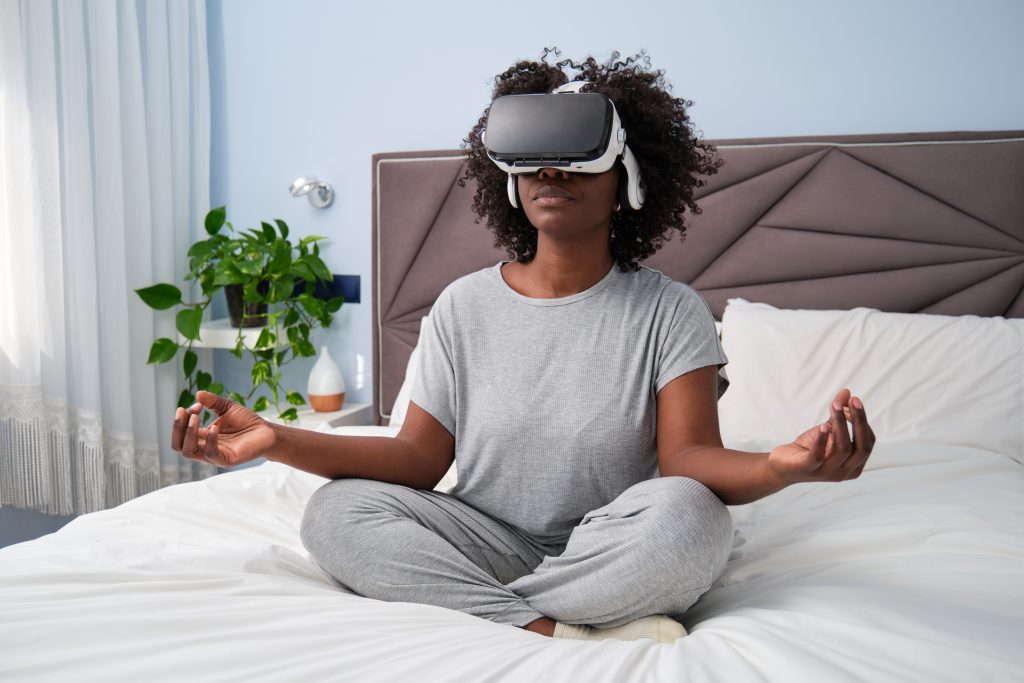
The power of VR to immerse users in a simulated reality makes it ideal for treating a range of mental health disorders. It has proven a useful tool for exposure therapy, which is the mainstay of management for different phobias. VR has the unique capacity to expose patients to the object or situation of their fear in a safe and controlled manner, helping them grow accustomed to it and no longer consider it a threat. This is particularly useful for phobias where exposure in the real world is difficult or unsafe. For instance, a person with a fear of flying cannot realistically be exposed to flying for just a few seconds but through the use of VR, controlled exposure with gradually increasing intensity is easily achievable.
It has also been demonstrated that VR is effective in the treatment of posttraumatic stress disorder (PTSD). In a therapist-guided study, veterans walked on a treadmill while interacting with images chosen to represent their traumatic experiences. Those who received VR treatment reported a 19% greater reduction in PTSD symptoms after 12 weeks relative to their counterparts. In addition, VR simulations are increasingly being used for meditation, reducing stress and anxiety through immersive experiences. These safe, controlled and immersive therapeutic environments made possible by XR give a significant boost the quality of mental healthcare.
Despite these different ventures, the application of XR in medicine is still relatively novel. As the technology develops and more research is conducted, XR is sure to bring innovative solutions that will propel the quality of healthcare many steps forward.
- Importance of Medical Entrepreunership for Healthcare Quality ImprovementHOTImportance of Medical Entrepreunership for Healthcare Quality Improvement