
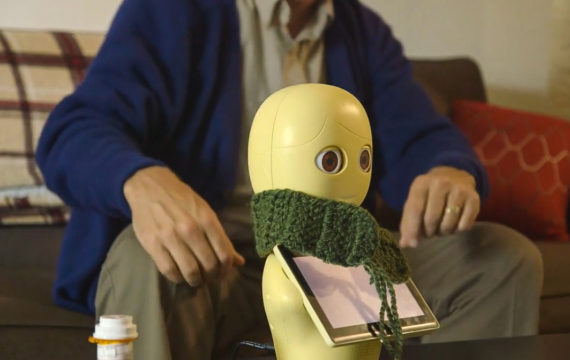
To assist patients in managing their chronic diseases, Catalia Health’s software combines expertise in psychology, artificial intelligence, and medical treatment plans. The end result is a smart robot companion that uses normal interactions to provide patients with advice, prescription reminders, and condition-specific information while also communicating pertinent information to healthcare professionals. Patients’ mobile phones may also be used for the information exchange.
About a year and a half ago, heart failure patients used Mabu for the first time in their homes as a result of a collaboration with the healthcare company Kaiser Permanente, which covers the cost of the service. Since then, Catalia Health has also collaborated with medical organizations and pharmaceutical firms to support people suffering from ailments including rheumatoid arthritis and kidney cancer.
Patients may find it difficult to continuously follow treatment recommendations for chronic conditions, and many fail to do so. Patients and humans alike benefit from Mabu’s everyday interactions as they use the information gathered by their robot counterpart to decide what treatments to administer.
Mabu at Catalia Health employs artificial intelligence to support daily discussions that vary in length based on the patient’s responses in order to learn more about each patient.

“A lot of conversations start with ‘How are you feeling?’ similar to what a doctor or nurse might ask,” the founder and CEO of Catalia Health – Cory Kidd explains. “From there, it might go off in many directions. There are a few things doctors or nurses would ask if they could talk to these patients every day.”
Mabu would, for instance, inquire about the patients’ weight and how they were feeling if they were experiencing shortness of breath. Mabu may advise patients to phone their doctors, send them this information, or schedule a follow-up appointment based on their responses, adds Kidd.
Mabu is now able to give the American Heart Association’s recommendations for patients with heart failure thanks to a partnership Catalia Health and the AHA established last year.
“A patient might say ‘I’m feeling terrible today’ and Mabu might ask ‘Is it one of these symptoms a lot of people with your condition deal with?’ We’re trying to get down to whether it’s the disease or the drug. When that happens, we do two things: Mabu has a lot of information about problems a patient might be dealing with, so she’s able to give quick feedback. Simultaneously, she’s sending that information to a clinician — a doctor, nurse, or pharmacists — whoever’s providing care.”