
AI in Ethiopian Healthcare, Possibilities and Challenges
Artificial intelligence (AI) is a rapidly evolving computer technology that is now widely used in the medical field to improve the efficiency of clinical work and prevent malpractice.
AI was first used in medicine in the 1970s to recommend treatment for glaucoma and some infectious diseases. Advances in Bayesian networks, artificial neural networks, and hybrid intelligent systems in the late 1990s have expanded bioinformatics research, thereby expanding the adoption of artificial intelligence in healthcare.
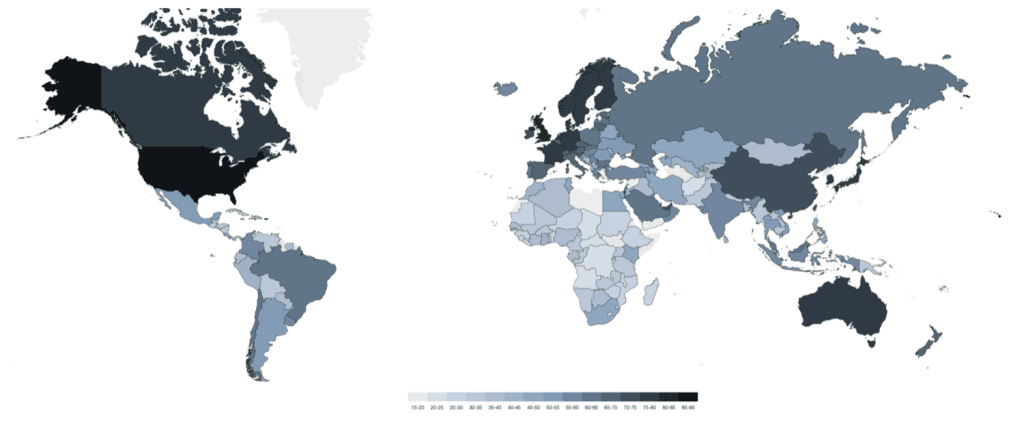
Ethiopia has established the Artificial Intelligence Center months ago under proclamation number 463/2020 by the Council of Ministers. AI I expected to play a significant role in achieving the country’s vision to become an African beacon of prosperity. And one major role AI could play is in healthcare
Strength in Implementing AI in Healthcare
Artificial intelligence can be a powerful tool for healthcare professionals in Africa, and the challenges of making it work are more than worth the effort. In developing countries, inequality in medical services in urban and rural areas is a serious problem. Shortage of qualified healthcare providers and facilities is reported to be a major cause of health availability and poor quality in rural areas.
The healthcare industry is one of the most expensive and demanding sectors in the world. In order to improve the quality of care and reduce costs, it is necessary to use technology. The development of artificial intelligence in healthcare will allow us to create intelligent systems that can help doctors diagnose patients and make decisions that are more efficient and effective.
Artificial intelligence in healthcare has many advantages over traditional methods:
- AI systems can analyze large amounts of data, which helps them to understand the patient’s condition better than a human doctor;
- AI can help doctors make accurate diagnoses faster than humans;
- AI provides more accurate results than traditional methods;
- It is much easier for doctors to train AI systems than people;
- Using AI reduces errors when giving patients medications or performing surgeries.

Novartis Foundation and Microsoft report that data and artificial intelligence will play a key role after the COVID-19 pandemic in Africa. The study, “Reimagining Global Health through Artificial Intelligence: The Roadmap to AI Maturity,” explores how low-income countries may end up surpassing high-income countries when it comes to the adoption of AI-based health technologies. African nations could be the fastest adopters of these technologies because they currently don’t have a lot of existing systems. This study also warns that low-income countries stand to lose out if their governments don’t seize this opportunity and invest more in AI.
The 2020 Partech report reveals that the health technology sector attracted $189 million to African startups during 2019. This amount represents 9.3% of the total amount allocated to startups operating in Africa and is equivalent to a growth of 969 percent compared to 2018. Hence, the health technology sector is not only growing but also mobilizing significant financial capital.
In addition, in low-income countries, there is an advantage to the fact that they do not have the issues faced by rich countries. Rich countries already have data hosted on different systems that are not always able to communicate. Interoperability is needed for AI to truly be effective. The opportunity then lies in the fact that low income countries, not having these systems, can develop a system so all data has the same structure and is interoperable.
Several companies are using artificial intelligence in the health sector across several African countries. This shows that the continent is building and developing a strong AI startup ecosystem for the healthcare sector.

Kenya
Afya Rekod is a platform that empowers patients with control of their health information and the right to access it instantly, reducing the amount of time between doctor visits. The platform employs artificial intelligence and blockchain technology to ensure secure, accurate management of data and a reduction in redundant treatments.

Nigeria
Nigerian startup Aajoh uses artificial intelligence to help individuals that send a list of their symptoms via text, audio and photographs, to diagnose their medical condition. The business was launched in 2015 and allows personalized medical diagnosis and treatment through predictive analytics.

Tunisia
SPIKE-X is an artificial intelligence startup that offers affordable, software packages designed to improve the way customer relations are handled. The company delivers customized and intelligent solutions suited for practically every industry–healthcare, retail, and security. SPIKE-X’s software packages bring significant value to communities and organizations by pinpointing solutions to some of today’s most pressing problems.
However, there are some challenges that must be overcome before AI can be implemented successfully in this area.
Challenges and Limitations of Implementing AI in Ethiopia, Africa
While Africa accounts for 12 percent of the world’s population, it faces 25 percent of the world’s disease burden and only 3 percent of the world’s health workers. These statistics are likely to worsen as a study by McKinsey estimates that 18 million health workers will be needed globally by 2030 (see Figure 1 below). In addition, the lack of data storage infrastructure available to African health facilities represents a barrier to AI adoption in the health sector. African governments should work to facilitate investment in data centers and data acquisition readiness so they will be able to fully benefit from this technology.
Some of the challenges being faced to date are:
- Lack of infrastructure and human resources – both of which are required to successfully implement AI solutions
- Lack of data – especially if it comes from a hospital that doesn’t participate in clinical trials (which is necessary for many projects)
- Lack of trust – because people don’t feel like they’re getting their money’s worth from these technologies
It’s also important to keep in mind that for any data-based initiative to be successful and sustainable, medical security and privacy must take the necessary precautions to ensure the infrastructure is secure. Countries will perform best when they are able to merge current infrastructure while improving upon it by offering new tech-based advancements.