

The digital transformation sweeping across the globe has propelled the healthcare industry forward into a technologically advanced era where the provision of care is becoming intricately linked to the use of technology. One example of the overlap of healthcare and technology is the emergence of “smart” hospitals.
What Is a Smart Hospital?
A smart hospital is one that uses technology and data to modernize and improve the quality of care it provides. Smart hospitals rely on data-driven insights, including machine learning models and AI-enabled medical devices to facilitate decision-making, which leads to faster, more precise diagnostics and more informed decision-making. In contrast to traditional hospitals, smart hospitals utilize technology – AI, the Internet of Things (IoT), robots and other smart devices – to automate and improve tasks already performed by care providers and hospital administration such as managing bed occupancy, monitoring patient vital signs, performing surgery and documenting medical records.
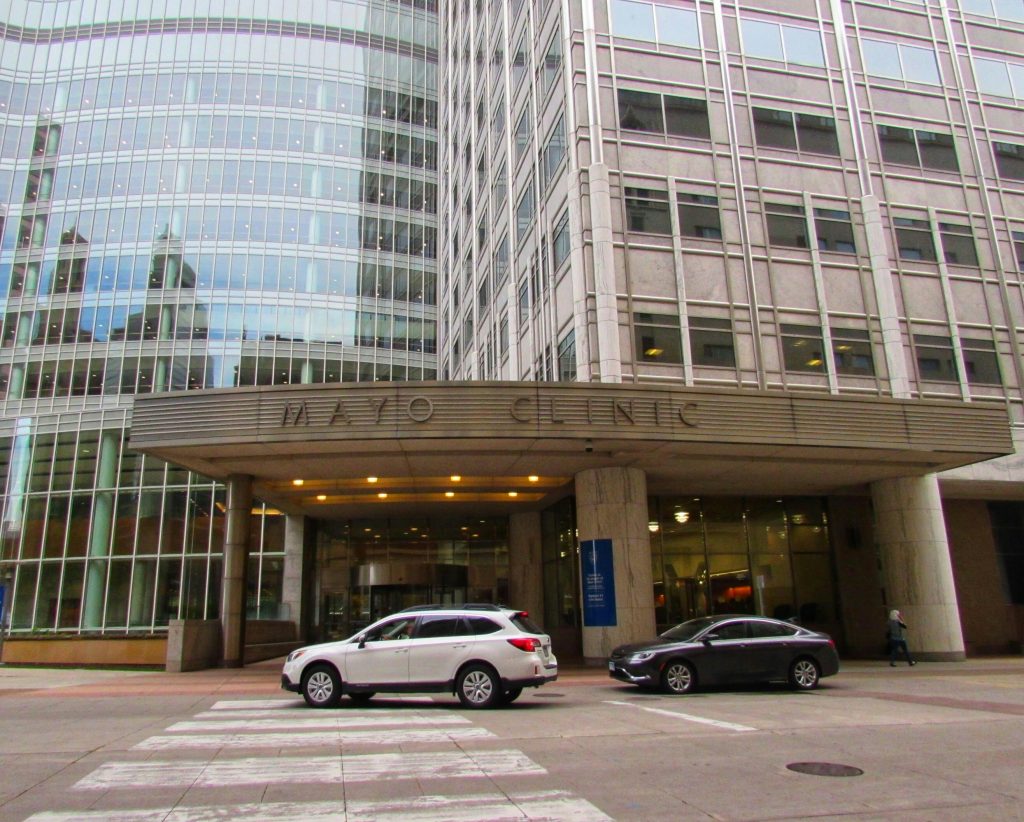
Mayo Clinic is a nonprofit academic medical center focused on integrated healthcare, education and research. Consistently ranked as one of the best healthcare centers in the United States and globally, it is also playing a prominent part in integrating healthcare with the latest technology. Its hospital in Rochester, Minnesota was ranked the best smart hospital in the world by Newsweek in both 2023 and 2024.
Its facilities boast a variety of technological ventures like ambient listening and AI- enabled diagnostic algorithms. Ambient listening, or ambient clinical voice, is an AI-powered tool that transforms a conversation between a clinician and a patient into a clinical note and adds it to electronic health records. It streamlines visit documentation and effectively reduces providers’ workload.
Mayo Clinic is also pioneering AI-assisted diagnosis, with seven AI-enabled electrocardiogram (ECG) algorithms active in its clinical practice for early detection and treatment of heart failure. Mayo Clinic cardiologists were able to use AI and a routine ECG to make 32% more diagnoses of weak heart pump – which can lead to heart failure or death – earlier, faster and at lower cost.
Aspiring to further blend digital and physical care, Mayo Clinic is building a new fully digitized hospital set to be completed in 2030. It aims to provide continuous care spanning virtual, inpatient, outpatient and at-home treatment. Mayo Clinic intends to build a facility for the future, digitizing and individualizing every step of care. The five buildings of the new campus will cover an area of over 2.4 million square feet, three fourths of which will be used for clinical care. They will include a “subway” system connected to a logistics center from which robots will deliver supplies.
A nonprofit multispecialty academic medical center that integrates clinical and hospital care with research and education, Cleveland Clinic has 23 hospitals and 276 outpatient locations where it provides some of the best care in the world. Its hospital in Ohio, USA took the number two spot in Newsweek’s ranking of the best smart hospitals in the world. The Cleveland Clinic hospital in Abu Dhabi is also included in the ranking and recognized as the best smart hospital in the United Arab Emirates (UAE).
Cleveland Clinic built a new hospital in 2023, the first in the United States to be built with its own private 5G network. Due to its fast download speeds and high bandwidth, 5G can enhance the use of the Internet of Things – networks of connected electronic devices – and streamline hospital workflow. It enables services such as transmission of medical imaging test results, 5G-augmented patient-check-in kiosks, digital monitoring and “infotainment” systems. The new hospital is also a telemedicine hub. Each inpatient and outpatient room is equipped with telehealth technology, allowing patients to see specialists at other locations.
A teaching hospital in Boston, Massachusetts General Hospital is the original and largest clinical learning facility of Harvard Medical School and houses the world’s largest hospital-based research program. It is known to integrate technology into the day-to-day hospital workflow. For instance, it put into use an automated system that employs mobile apps for remote patient monitoring, which reduced patient falls by 50% and the cost of 1:1 sitters for physical observation, demonstrating the power of AI to prevent medical errors.
Massachusetts General Hospital increases access to quality care by providing virtual urgent care to its patients. It allows them to connect by video with providers and discuss minor illnesses and injuries that don’t require urgent in-hospital care.
It is also a pioneer in using blockchain – a digitally distributed, decentralized, public ledger that allows transparent information sharing within a network – for patient data storage and sharing.

The Johns Hopkins Hospital is a nonprofit academic center in Baltimore, Maryland, and one of the top-ranked hospitals in the United States. It is known for its 5,200 square-foot command center called the Judy Reitz Capacity Command Center. The command center is equipped with AI apps that track and give real-time data on the occupancy of every bed in the hospital and use predictive modeling to anticipate when the next Intensive Care Unit (ICU) bed or operating room (OR) table will be available. This modern system reduces transfer delays, speeds up ambulance dispatch and bed assignment to emergency patients and increases the ability to accept patients with complex conditions from other centers. The command center is so effective that it increased the hospital’s capacity by the equivalent of 16 beds.
Johns Hopkins is also home to an advanced robotic surgery program. Its surgeons are performing various surgeries including robotic colon, rectal, liver, and pancreatic surgery. Robotic surgeries allow surgeons to provide care though less invasive procedures with better outcomes and shorter hospital stay. In addition, the Johns Hopkins Hospital’s dedicated training center for minimally invasive surgical training provides simulation and surgical robotics training through state-of-the-art facilities.
- 5 Times Shark Tank Seen The Best of Medical Entrepreneurship (Doctorprenuership)New5 Times Shark Tank Seen The Best of Medical Entrepreneurship (Doctorprenuership)
Founded in 1852 and located in New York City, the Mount Sinai Hospital is one of the oldest and most highly-ranked teaching hospitals in the United States. Its efforts to incorporate the latest technology into its care has earned it a spot on the list of the world’s best smart hospitals.
Patients in Mount Sinai hospital rooms are supplied with bedside tablets that have been configured to give them access to their medical records, medication information, and care team member profiles. The tablets also provide answers to their questions and disease-specific educational content, entertainment, videoconferencing services. Some rooms have “digital whiteboards” – smart TVs that display information including patients’ daily schedule, care team members and care goals. These features allow improved care provider experience by automating certain tasks and enhanced patient experience through information and engagement.
The Mount Sinai Hospital’s use of innovative tech solutions is further demonstrated by its move to migrate its data to the cloud, shutting down on-site data centers and servers. This venture significantly reduced costs, while upgrading the hospital to a scalable technology infrastructure with increased security and improved recovery.
These five hospitals are pioneers in the healthcare industry. By leveraging the latest and most innovative technology to provide care of the highest quality, they provide a glimpse into the endless possibilities for the future hospital.
- Importance of Medical Entrepreunership for Healthcare Quality ImprovementHOTImportance of Medical Entrepreunership for Healthcare Quality Improvement