

Length of stay (LOS) in hospitals is one of the biggest issues patients face today. The longer a patient stays in the hospital, the greater the risk they will encounter medical errors. (e.g. Hospital Acquired Infections, medication errors, falls,…). Moreover, prolonged LOS is tied to higher mortality rates. A study shows adding ONE day of stay increases the patient’s risk of infection by 1.37%.
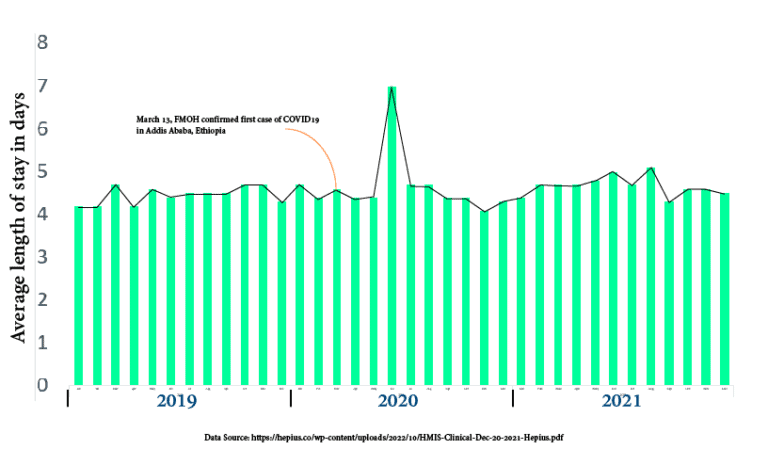
The average length of stay in Ethiopia, according to data collected from the national HMIS, from 2019 to 2022 was fairly 4.6days. This number is surprisingly good, as most would argue this is not the case in practice in most facilities, a data that needs further study and questioning. Read the full report here
What can be the causes of Hospital Acquired Infections (HAIs)?
While hospital-acquired infections have multiple causes. The most common ones are:
- Excess unnecessary length of stay and admission
- Contaminated instruments, objects, and substances.
- Poor use or maintenance of catheters and ventilators.
- Patient/health care worker contacts.
- Contaminated air conditioning systems.
- Congested hospitals (beds near one other)
- Improper sterilization and disinfection practices.
Who is responsible for HAIs?
The prevention of HAI is fully the responsibility of the healthcare facility. Reducing hospital stays for patients has many advantages for hospitals. The hospital with the best efficiency will also be the best hospital. In Western countries, medical insurance companies support the quality of care in healthcare facilities to minimize the occurrences of HAI, to minimize the cost associated with it, even though the bigger burden still relay on the patients.
Research shows that 1 in 10 patients admitted will suffer from HAI. According to the CDC, close to 100,000 people die annually. And in countries like Ethiopia with little to no medical insurance coverage, the medical cost will also be an additional load on the patients and families of the patients.